

Pemex and CFE report quarterly losses

Mexico’s two state energy companies closed the first quarter of 2026 with losses, with Pemex posting a net loss of roughly MXN 46 billion and CFE reporting about MXN 4.5 billion. The significance is not the scale alone, but the composition: both companies maintained stable production, improving operational indicators, and in Pemex’s case even strong EBITDA generation, yet still ended in negative territory. The losses are not coming from a collapse in output or demand; they are being generated in the financial layer.

Pemex’s numbers make the tension visible. Production held around 1.65 million barrels per day, refining throughput increased, and EBITDA reached approximately MXN 118 billion, placing margins above industry benchmarks. At the same time, the company absorbed losses driven by financial costs, fiscal burdens, and exchange rate effects. This is not a mismatch between production and revenue; it is a mismatch between operational performance and financial structure. The system is generating barrels and products, but the balance sheet is carrying the volatility of prices, currencies, and financing.

CFE’s case is smaller in magnitude but aligned in direction. The company continues to operate a gas-dependent power system with stable demand, yet its losses are tied to the cost of managing fuel price exposure through derivatives. Hedging strategies covering a significant share of gas consumption are protecting against price spikes, but under current market conditions they are marking negative. The company is effectively paying upfront for stability, converting price uncertainty into financial losses that appear immediately, even if they prevent larger disruptions later.

What connects both cases is the shift from operational risk to financial risk management. Pemex is hedging crude prices and refining margins, while CFE is hedging gas prices and financial variables such as exchange rates and interest rates. These strategies are not marginal; they are central to how both companies operate. The outcome is a system where volatility is not removed but redistributed across time and instruments, with accounting losses reflecting that redistribution.

The policy context reinforces this dynamic. Both companies have been restructured under a model that prioritizes energy sovereignty, price stability, and state control over purely financial performance. Pemex operates under a simplified fiscal regime with a unified extraction duty, while CFE has been reintegrated as a state enterprise with a non-profit orientation. These changes reduce certain fiscal pressures and consolidate control, but they also blur the line between operational efficiency and policy-driven financial outcomes. Losses become, in part, a function of design rather than purely of market conditions.

There is also a deeper constraint that neither set of results resolves. Mexico’s energy system remains structurally exposed to external pricing dynamics. Pemex depends on international crude prices and refining margins, while CFE relies heavily on imported natural gas indexed to U.S. benchmarks. Hedging can smooth short-term volatility, but it cannot alter that dependency. The cost of exposure is therefore not eliminated; it is managed through financial instruments whose effectiveness depends on timing and market direction.

What is not explicitly stated in the results, but becomes clear when both companies are read together, is the growing importance of financial architecture in sustaining operational stability. Access to counterparties, liquidity, and favorable refinancing conditions is now as critical as production volumes or generation capacity. Pemex’s ability to reduce debt and return to capital markets, and CFE’s reliance on international financial institutions for derivative positions, point to a system increasingly anchored in financial intermediation.

The result is a paradox: operational indicators suggest stability, even improvement, while financial outcomes signal strain. Mexico’s energy system is functioning, but it is doing so by transferring volatility from the field and the grid into the balance sheet. As long as that structure holds, quarterly losses will remain less a sign of operational weakness than a reflection of how the system is choosing to manage risk, and how much it is willing to pay for stability.
Grid Decoupling: IEA

As central utility grids across Europe and North America struggle with both aging infrastructure and the loss of Middle Eastern…

You must be logged in to view this content.

U.S. exempts new reactors from review

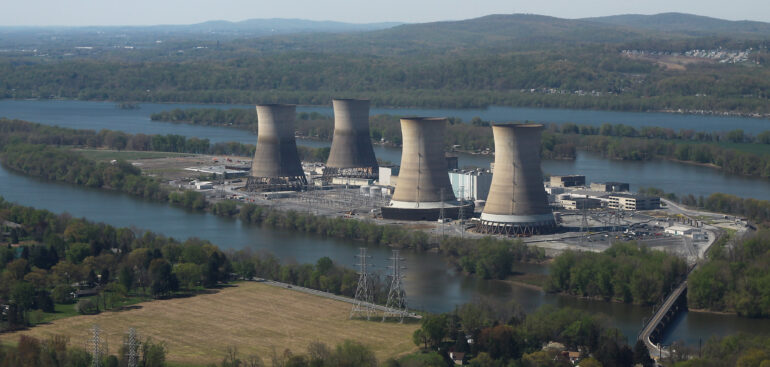
The Trump administration moved in early 2026 to exempt new nuclear reactors from parts of the federal environmental review process, removing a layer of permitting that has historically delayed projects for years. The decision matters because it directly targets one of the most persistent bottlenecks in U.S. nuclear development, the time between project proposal and construction, yet it leaves untouched the constraints that have limited actual deployment.

The policy shift is clear in its intent. By narrowing or bypassing environmental review requirements, the administration is attempting to compress timelines and reduce uncertainty for developers, particularly those working on small modular reactors and advanced designs. In a sector where projects have routinely faced decade-long lead times, the ability to move faster through permitting is not marginal. It changes the risk profile of development and signals a federal willingness to prioritize speed over procedural depth.

However, the distinction between capacity and execution immediately emerges. The United States already has a pipeline of proposed nuclear projects, but very few have reached construction, and even fewer have been completed on schedule. The two most recent large-scale reactors required years of delay and tens of billions in additional cost, underscoring that regulatory approval is only one part of the constraint. Removing a permitting layer does not resolve the underlying economics of nuclear construction.

Capital remains the central friction. Nuclear projects require large upfront investment with long payback periods, and even with streamlined permitting, financing depends on confidence in cost control and future revenue stability. Developers and investors are not primarily constrained by environmental review timelines; they are constrained by the risk of cost overruns and uncertain market conditions. In that sense, the exemption addresses a visible bottleneck but not the dominant one.

Supply chains introduce a second limitation. Advanced reactors, particularly modular designs, depend on manufacturing capabilities that are still being developed. The promise of factory-based production has not yet translated into scaled output, and key components remain specialized, with limited suppliers. Accelerating permitting without parallel expansion in manufacturing capacity risks creating a pipeline of approved projects that cannot be executed at pace.

There is also a structural tension between policy and reality in how nuclear is being positioned. The exemption reflects a broader push to integrate nuclear into industrial policy, particularly as electricity demand rises from data centers, electrification, and reshoring of manufacturing. In that context, nuclear is framed as a stable, low-carbon baseload source capable of supporting large-scale industrial loads. Yet the timeline mismatch is significant. Even under accelerated permitting, new reactors will not come online quickly enough to address near-term demand growth.

What is not explicitly stated in the policy, but is central to its interpretation, is the shift in how environmental trade-offs are being evaluated. By reducing review requirements, the administration is effectively prioritizing speed of deployment over procedural safeguards, betting that the strategic value of nuclear capacity outweighs the risks associated with expedited approval. This recalibration reflects a broader trend in energy policy, where security and reliability are gaining weight relative to process.

The geopolitical dimension is also implicit. The United States is not only seeking to expand domestic capacity but to reassert leadership in nuclear technology, particularly as other countries advance their own reactor programs. Streamlining domestic deployment is part of building credibility for exports and partnerships, especially in markets looking for alternatives to Russian and Chinese nuclear technology. The policy therefore operates both internally, by attempting to unlock projects, and externally, by signaling competitiveness.

The outcome, however, depends on whether the removal of regulatory friction translates into actual builds. If capital and supply chain constraints persist, the exemption may accelerate approvals without materially increasing capacity in the near term. This would widen the gap between policy ambition and physical deployment, reinforcing a pattern where announcements outpace execution.

The decision clarifies direction but not delivery. Nuclear is being repositioned as a strategic asset within U.S. energy policy, yet the mechanisms that determine whether reactors are built remain largely unchanged, leaving the pace of deployment tied less to permitting speed than to the unresolved economics of construction.